Build the Best CV You Can. Then Don't Send It.
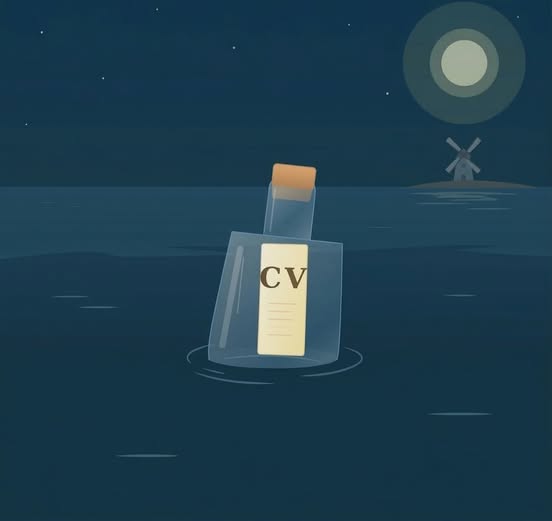
Build the best CV you can. Then don’t send it anywhere.
A slightly long post, but hopefully a useful one: about CVs that get fired off in every direction and land nowhere, about what actually works today, and about why most of what we were taught about “what a CV must include” is, right now, little more than background noise. And at the very end, a free tool to help you move from searching to finding.
Yes, you read that right. And no, I haven’t lost it (I hope).
In a previous post I said it is time to stop looking for jobs and start hunting companies. The responses reinforced something that comes up again and again: many excellent professionals, with a lot to offer, feel they are knocking on locked doors, as if their fate was sealed before the process even began. In other words, “they don’t even get back to me!”
Today I want to talk about the why, about what you can do, and about how to build a CV that actually works for you (spoiler: it has nothing to do with font size or whether you added a photo).
First: why send a CV at all?
Not because CVs don’t matter. They do. But the spray-and-pray approach, scattering CVs and praying something sticks, is not only ineffective, it can actively hurt your chances of landing the role you want.
First, the statistics are not on your side. The success rate of cold CVs through job boards is dramatically low, today more than ever. In most cases you are just another page in a stack of hundreds, filtered by an algorithm before a human eye ever sees you.
Second, and this is what many do not know: applying online can block you. Say you found a company you like, applied through the site, and got rejected. A week later a contact offers to bring you in through the back door. Too late: in most companies’ HR systems, once you have been rejected, you are blocked. One impulsive application burned the human path that could have been far more effective.
Third, and maybe most important: your time is your most precious resource. Every hour spent tailoring a CV to a random posting, writing a cover letter no one will read, and waiting for a reply that will not come, is an hour you did not spend building a real connection with the right person at the right company.
Spray-and-pray feels like action. But too often it is the illusion of motion rather than progress. That said, for some people the classic method works. If you sent a CV and were in an interview within a week, great, do not change a thing. But for many, especially those at a turning point, a move abroad, a career change, with real experience and ambitions beyond “just another job”, the doors stay shut while a large window stands wide open for those willing to think differently.
So what do you do?
When you combine art and science, creativity, insight, and data-driven research, to attract the right attention from the right people, something interesting happens: you can reach a point where someone asks you for your CV, not the other way around. Sound far-fetched? Maybe. But it happens every day, here in the Netherlands too. And when it does, the CV turns from a message in a bottle into a document that confirms what someone already knows about you. A completely different game.
And once they ask for it, what goes in?
Let me say something that might annoy a few people: there are no CV “best practices”. The endless debates about font, photo or no photo, one page or two, color or black and white, are background noise with diminishing returns. I have seen excellent CVs that broke every rule in the book, and CVs that did everything “right” and said nothing. So instead of rules, here are a few things that actually make the difference:
A story, not a list. A CV has to tell a story: a journey, growth, direction. Not piles of buzzwords or a shopping list of technologies. The reader should finish understanding where you got to, how, and where you are going. Coherence is the most important thing, and happily, the rarest. A golden chance to stand out.
A double headline. Your full name, and beneath it two lines. The first dry and professional, what you are (Data Lead / Operations Director / Product Manager). The second free, what you are to the people who work with you (“Turning complex operations into scalable systems”). The second line is what sticks.
The opening paragraph, the elevator test. You have just finished a great interview for a role you love. You leave the room, and the CEO happens to step into the elevator with you. You have 100 seconds to impress. What do you say? Not a list of technologies. A short, sharp story of where you came from and where you want to go, one that makes them say “now I’m curious.” That is what belongs in your first paragraph.
Achievements, not responsibilities. Nobody wants to read “Managed a team of 5.” What is interesting is what happened because of you. Think about the KPIs of each role, and how you met or beat them. That is exactly what someone is buying when they hire you.
Expertise, not generic. Whether you are in tech, finance, operations, or marketing, the market wants people who understand a specific area in depth. What is the thing you do better than most? That is what should stand out.
A trajectory, not a list of jobs. Were you somewhere a long time? Show the progression, promotions, growing responsibility, projects that scaled. In an era when job hopping became the norm, stability actually stands out.
Don’t lie. Just don’t. Someone once contacted me, sounding stressed, invited to an interview the next day in Haarlem. “Sounds great,” I said, “so what’s the problem?” A short silence. “The problem is I’m in Petah Tikva, and on my CV I wrote that I’m from Amsterdam.” We both understood: he was not stuck because of the distance. He was stuck because of the lie. When it comes out, and it does, you burn not just the chance but your reputation. If you are not in the Netherlands, do not pretend. Say there is a plan to move.
For context: relocation roles have dropped dramatically. One of the largest tech companies in the Netherlands, the kind that probably helped you book your last holiday, offered around 500 open relocation roles in 2019. Today? About 5.
Put your energy where it moves the needle. I have seen people burn days on a Dutch phone number, the “right” address, a new email, as if that is what stands between them and a job. It is not. A serious employer sends an email and sets up a call. Invest in the story, the expertise, the connections. The rest is noise.
Less is more. I have interviewed hundreds of candidates and scanned thousands of CVs. I have never once seen a CV rejected for being too short.
A new reality demands a new perspective, and sometimes the courage to change your approach.
I built a smart prompt that helps upgrade a CV dramatically. Write to me, “CV” in a private message, and you will get both the prompt and a link to a tool that checks your CV is readable and accessible to all the major hiring systems.
Go get them.